How 5,000 years of trade shaped today’s headlines.
From the program book for “Tectonic Shifts in Global Trade” with Baroness Dambisa Moyo on November 21, 2026.
Humans have always been resourceful. Our ancestors’ nutmeg monopolies and tea taxes look a lot like today’s fights over rare earths and tariffs, and they help explain where global trade may be headed next.
4000-3100 BCE Some of the earliest records of long-distance trade in human history come from Mesopotamia during the Uruk period. Lacking materials like timber, stone, and metals locally, early cities traded their agricultural and textile surpluses across networks reaching as far as the Indus Valley.
1900 BCE Assyrian merchants ran a trading colony at Kanesh in central Anatolia where they exchanged tin and textiles for silver and gold. Archaeologists have recovered more than 23,000 clay cuneiform tablets there, including contracts and loan records.
1050–700 BCE Phoenician traders carried purple dye, cedar, and glass across the Mediterranean, and their alphabet of 22 consonants traveled with them. The Greeks adapted it in the eighth century BCE, and it later became the basis of the Latin alphabet.
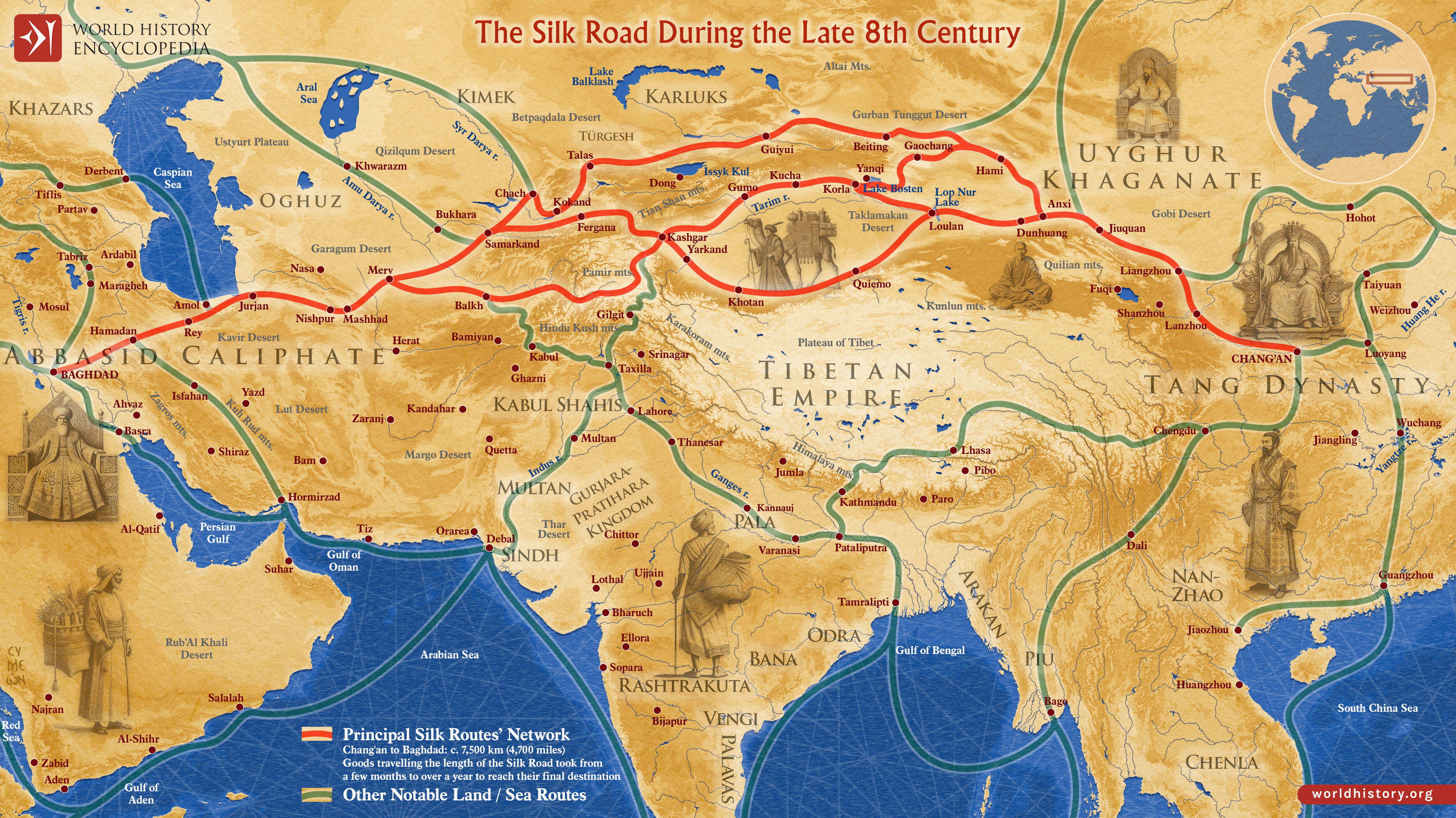
200 BCE The Han dynasty sent envoy Zhang Qian into Central Asia to seek allies against Xiongnu raiders. His journey laid the groundwork for the Silk Road, which carried silk west and horses, glass, and silver east. Buddhism, Manichaeism, and Christianity spread along the same routes.
TODAY In 2013, Chinese President Xi Jinping announced the Belt and Road Initiative to finance ports, railways and power plants across Asia, Africa and Europe, naming it after the Silk Road.
552 The historian Procopius recorded that monks smuggled silkworm eggs from Central Asia to Constantinople for Emperor Justinian. The Byzantine Empire built its own silk industry and ended its reliance on Persian traders.
TODAY The CHIPS and Science Act of 2022 set aside $39 billion to build advanced memory chip factories in the U.S.
70–1100 The Ghana Empire grew rich as a middleman in trans-Saharan trade. Arab and Berber merchants crossed the desert by camel caravan to trade salt, copper, and other goods for West African gold, ivory, and hides. Ghana’s kings taxed goods twice, once entering the empire and again leaving it, accumulating massive royal wealth.
TODAY The African Continental Free Trade Area, in effect since 2021, aims to increase trade among African countries.
900–1500 Swahili city-states such as Kilwa and Mombasa traded ivory, gold, and enslaved people from inland Africa for Middle Eastern ceramics, Indian textiles, and Chinese porcelain. The Swahili language developed in these ports, a Bantu language with thousands of Arabic loanwords. An estimated 100 million to 200 million people speak it today.
1202 Leonardo of Pisa, known as Fibonacci, published “Liber Abaci,” which showed European merchants how to use Hindu-Arabic numerals for bookkeeping and currency exchange. He had learned the system in Bugia, now Béjaïa, Algeria, where his father served as a customs official. Indian mathematicians had developed it centuries earlier.
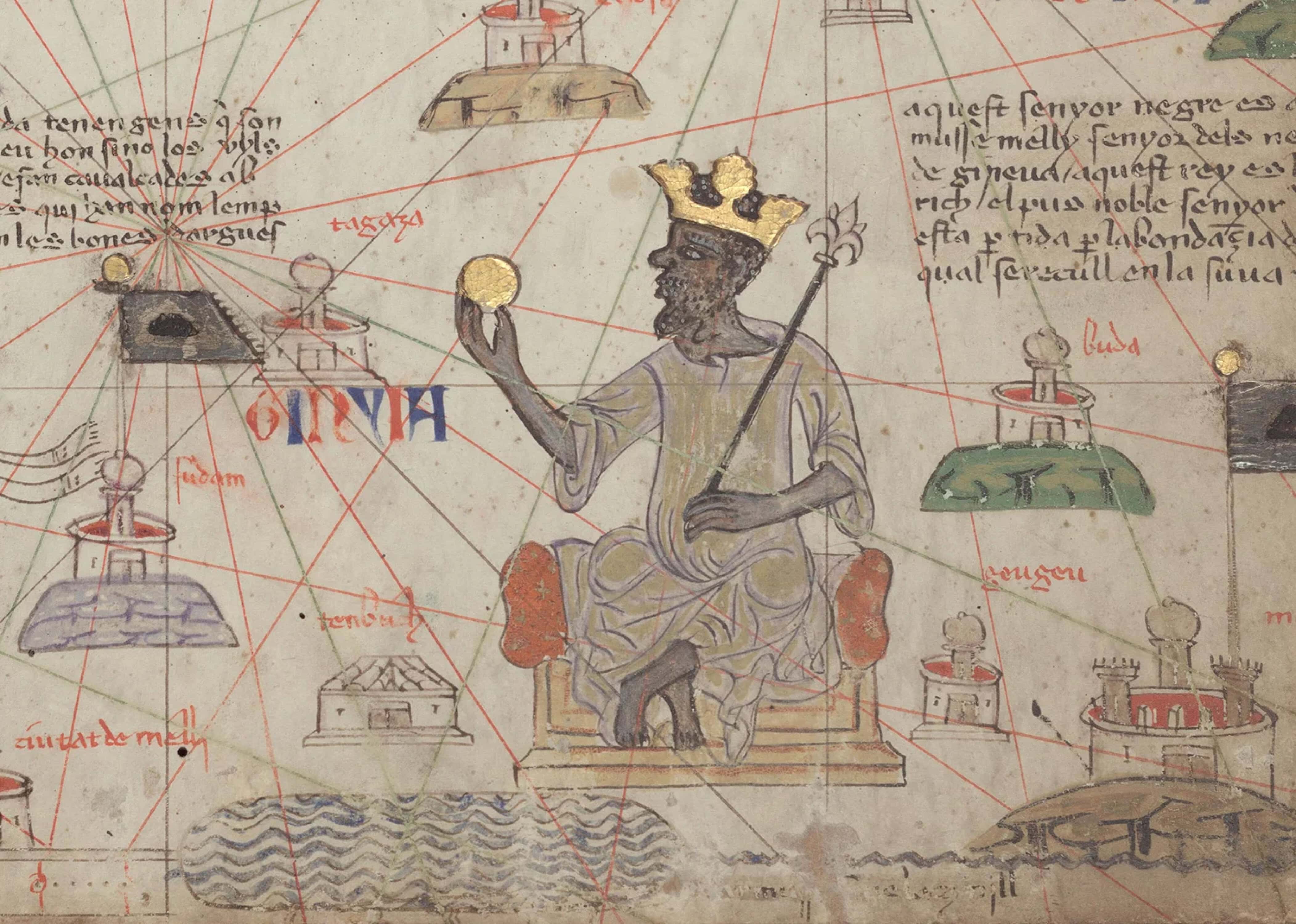
1324 On his hajj to Mecca, Mansa Musa, the ruler of Mali, stopped in Cairo, where he spent and gave away so much gold that its price there fell for years.
1347 The Black Death spread from Central Asia along trade routes linking the Mongol khanates. It struck the Middle East and North Africa before reaching Europe. It killed an estimated one-third of the population of Egypt and Syria and up to 50% of Europe’s. Venice later required arriving ships to wait 40 days before unloading, which gave English the word “quarantine.”
1356 German merchant towns formed the Hanseatic League to expand trade and protect against piracy and robbery. Led from Lübeck, the league ran trading posts from London to Novgorod. It declined as rival states grew stronger and trade shifted toward the Atlantic.
TODAY The Milwaukee Framework was recently adopted by the U.S. and 27 other countries to enforce against steel overcapacity, mainly from China.
1453 After the Ottomans captured Constantinople, they challenged the sea power of Venice and Genoa in the eastern Mediterranean. Many Genoese merchants moved their business west and invested in Spanish and Portuguese ventures, including voyages seeking new routes to Asia.
1492 Spain sponsored Christopher Columbus, a Genoese navigator, to find a western sea route to Asia. He reached the Americas instead, starting an exchange between the hemispheres. Potatoes, corn, tomatoes, and cacao went east, and wheat, cattle, horses, and sugar went west, along with smallpox and measles.
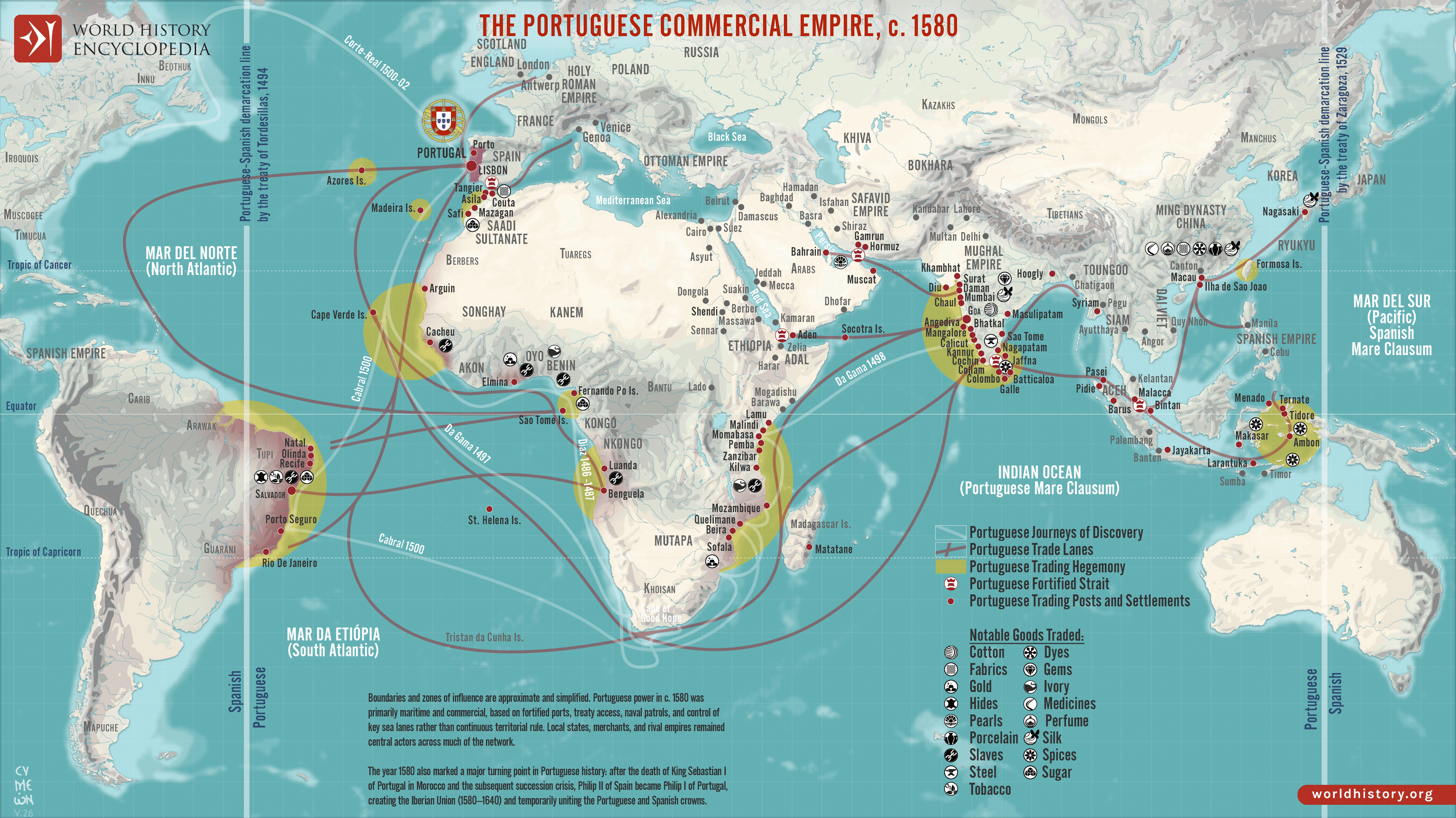
1498 Portuguese navigator Vasco da Gama sailed around Africa to Calicut, India, letting Portugal buy spices without paying the middlemen who controlled the Red Sea and Mediterranean trade. Portugal then seized Goa in 1510, Malacca in 1511, and Hormuz in 1515, and required Asian merchant ships to buy Portuguese passes or risk seizure.
1501–1866 European traders forced about 12.5 million Africans onto ships bound for the Americas, and about 10.7 million survived the crossing. Enslaved Africans and their descendants produced sugar, tobacco, rice, and cotton for world markets. After the U.S. Congress banned the import of captives in 1808, the slave trade turned inward. Dealers sold hundreds of thousands of Black Virginians to cotton plantations in the Deep South, and Richmond’s Shockoe Bottom became the largest slave market in the Upper South.
TODAY The 2026 U.S. tariffs charge higher rates to countries that did not commit to banning goods made with forced labor.
1519–1815 Spain conquered the Aztec and Inca empires and claimed most of Central and South America, and its colonies could trade only with Spain. War, disease, and forced labor killed as much as 90% of the Indigenous population in some regions. Beginning in 1565, Spanish galleons carried silver mined by Indigenous forced laborers in Potosí, in present-day Bolivia, across the Pacific to Manila. The route joined the Americas, Asia, and Europe into one trading system for the first time.
1602 Dutch merchants formed the Dutch East India Company (VOC) to share the cost and risk of voyages to Asia, and it sold shares to the public. The Dutch government gave it the right to wage war, sign treaties, and build forts. In 1621, VOC forces invaded the Banda Islands to take control of the world’s nutmeg supply through brutal force. The monopoly lasted until a French official smuggled nutmeg seedlings to Mauritius in 1770.
TODAY China mines about 70% of the world’s rare earths and processes about 90%. Other countries are now funding mines and processing plants elsewhere.
1630s Japan’s Tokugawa government restricted foreign trade and contact to limit the influence of Christian missionaries and European powers.
1651 England’s Navigation Act barred foreign ships, mainly Dutch, from bringing goods from Asia, Africa, or the Americas into England, and customs officers could seize ships that broke the rule. The act helped spark the First Anglo-Dutch War. In 1660, Parliament required colonies such as Virginia and Barbados to ship tobacco, sugar, and other listed goods only to England or its other colonies.
TODAY In October 2025, the U.S. began charging port fees on Chinese-built and Chinese-owned vessels, then suspended them for one year under the Busan truce.
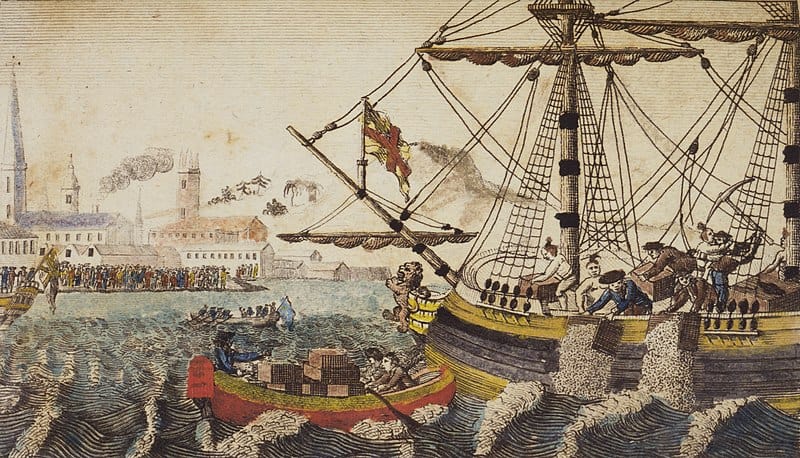
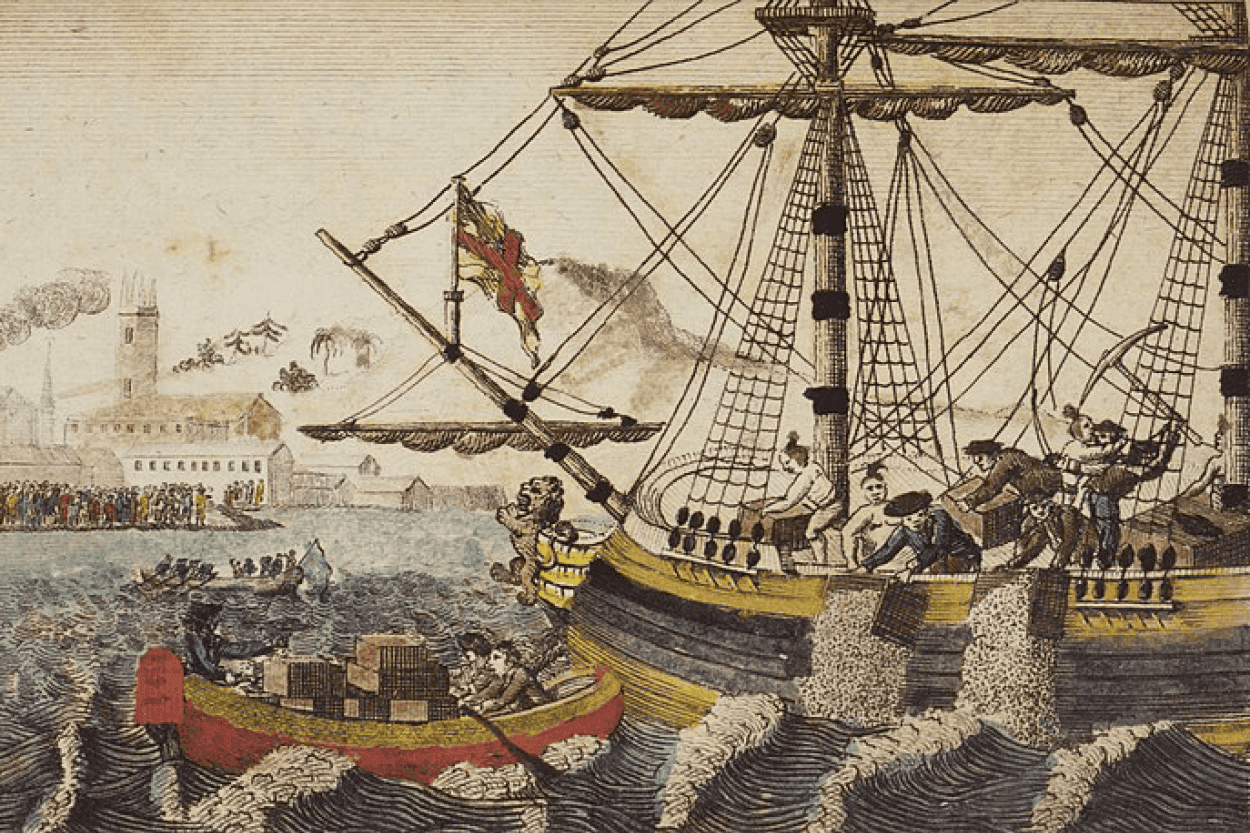
1773 The British East India Company was near bankruptcy, with about 17 million pounds of unsold tea in its London warehouses. Parliament’s Tea Act let the company sell that tea directly to the American colonies at a lower price, while keeping a tax colonists had never approved. Members of the Sons of Liberty dumped 342 chests of the tea into Boston Harbor. Parliament closed Boston’s port in response, and the colonies convened the First Continental Congress, a step toward the American Revolution.
TODAY The fight over who could tax imports shaped the U.S. Constitution, which gave that power to Congress. In February 2026, the U.S. Supreme Court ruled that a 1977 emergency-powers law did not give the president authority to impose tariffs.
1789 The new U.S. federal government needed revenue, and the Tariff Act of 1789 was among the first laws Congress passed. Customs duties supplied most federal revenue for much of the 19th century, until the income tax took their place in the 20th.
TODAY The administration of U.S. President Donald Trump has cited tariff revenue as a reason to raise tariffs. After the Supreme Court ruling, the government began paying refunds. At time of print, customs officials had approved about $136.6 billion in refund claims.
1839–1842 British merchants smuggled opium from British-ruled India into China to pay for tea. When Chinese official Lin Zexu destroyed more than 20,000 chests of it, Britain went to war. The resulting treaty forced China to cede Hong Kong and open five ports to foreign trade.
1860 Britain and France signed the Cobden-Chevalier Treaty, whose most-favored-nation clause extended any tariff cut either country made to every partner with a similar agreement.
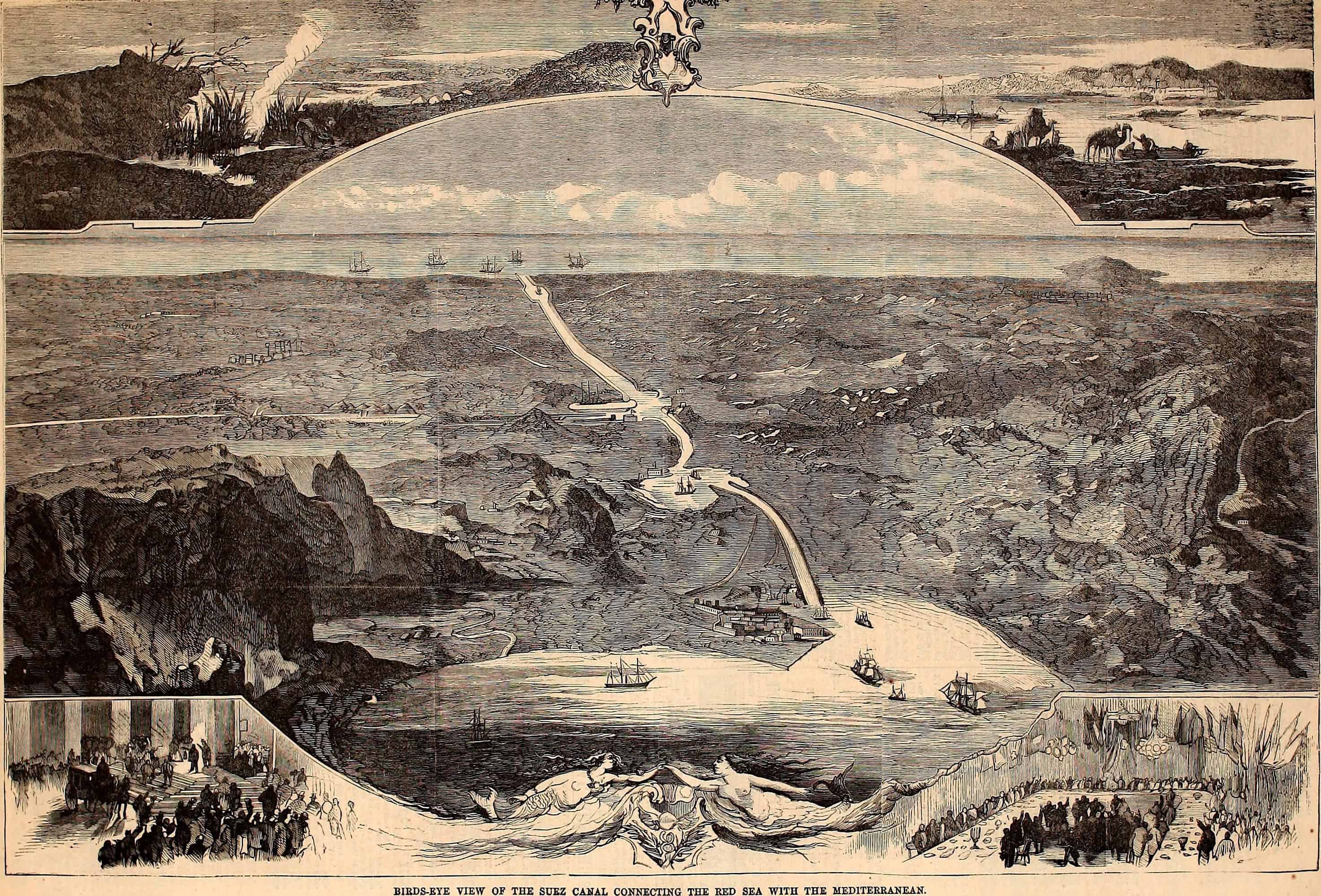
1869 The Suez Canal opened, cutting the sea route from London to Bombay by about 40%. A French-led company built it largely with Egyptian forced laborers, and estimates of the deaths range from thousands to more than 100,000. Debt pushed Egypt to sell its canal shares to Britain, which occupied the country in 1882. Egypt nationalized the canal in 1956.
TODAY Egypt lost more than half its canal revenue in 2024 after Houthi forces in Yemen began attacking commercial ships in the Red Sea.
1930 U.S. President Herbert Hoover signed the Smoot-Hawley Tariff Act, which raised duties on more than 20,000 imported goods. Canada and other trading partners retaliated. The value of world trade fell by about two-thirds between 1929 and 1934, though economists attribute most of that drop to the Depression.
1944 Delegates from 44 countries met at Bretton Woods, N.H., and created the International Monetary Fund and the World Bank. Much of Africa and Asia was still under colonial rule and had no seat. A planned International Trade Organization failed when Congress did not approve it.
1947 Twenty-three countries signed the General Agreement on Tariffs and Trade (GATT) which required members to give one another equal tariff rates. Over eight rounds of talks, members cut tariffs on factory goods to below 5%, but farm goods and textiles, the exports many poorer countries depended on, were largely left out. The World Trade Organization replaced it in 1995.
1960–1974 Iran, Iraq, Kuwait, Saudi Arabia, and Venezuela founded the Organization of the Petroleum Exporting Countries in 1960 to take control of oil prices from Western oil companies. During the 1973 Arab-Israeli war, Arab producers cut shipments to the U.S. and other countries that supported Israel. Oil prices roughly quadrupled by early 1974.
TODAY Iran’s closure of the Strait of Hormuz has hurt oil producers as well as buyers. Saudi Arabia’s trade fell 37% in value in the first five months of 2026.
1962 Congress passed the Trade Expansion Act. Its Section 232 lets the president restrict imports that threaten national security.
TODAY The U.S. now uses Section 232 to tax imported steel, aluminum, copper, autos, lumber, and semiconductors.
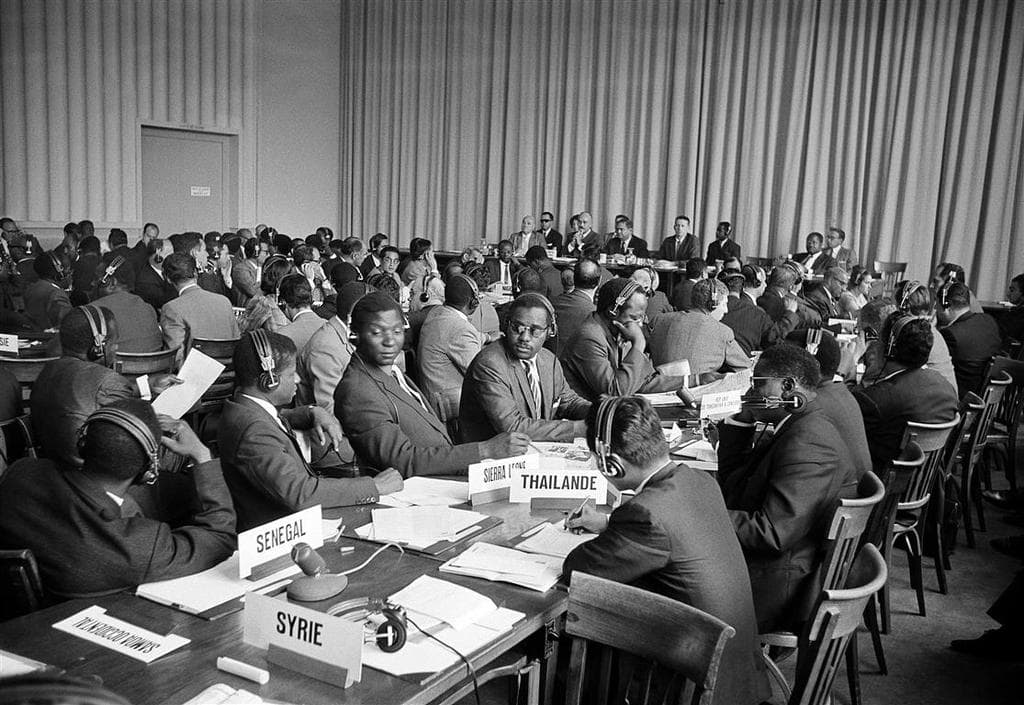
1964 At the first United Nations Conference on Trade and Development, 77 developing countries formed a bloc known as the Group of 77. They argued that the GATT system favored industrial nations and that prices for the raw materials they exported were falling relative to the manufactured goods they bought. The group now has 134 members.
1975 President Gerald Ford signed the Trade Act of 1974. Its Section 122 allows temporary import tariffs of up to 15% for 150 days. Section 301 lets the U.S. impose tariffs on countries it finds treat American businesses unfairly.
TODAY In February, President Trump imposed a 10% tariff on most imports under Section 122.
1985 High U.S. interest rates drove up the dollar, making American exports expensive and Japanese imports cheap. As the U.S. trade deficit hit a record, the U.S., Japan, West Germany, France, and Britain agreed in the Plaza Accord to push the dollar down. It lost about half its value against the yen in two years, and Japanese automakers began building more factories in the U.S.
1991 The Soviet Union dissolved and its former republics and allies opened to world markets.
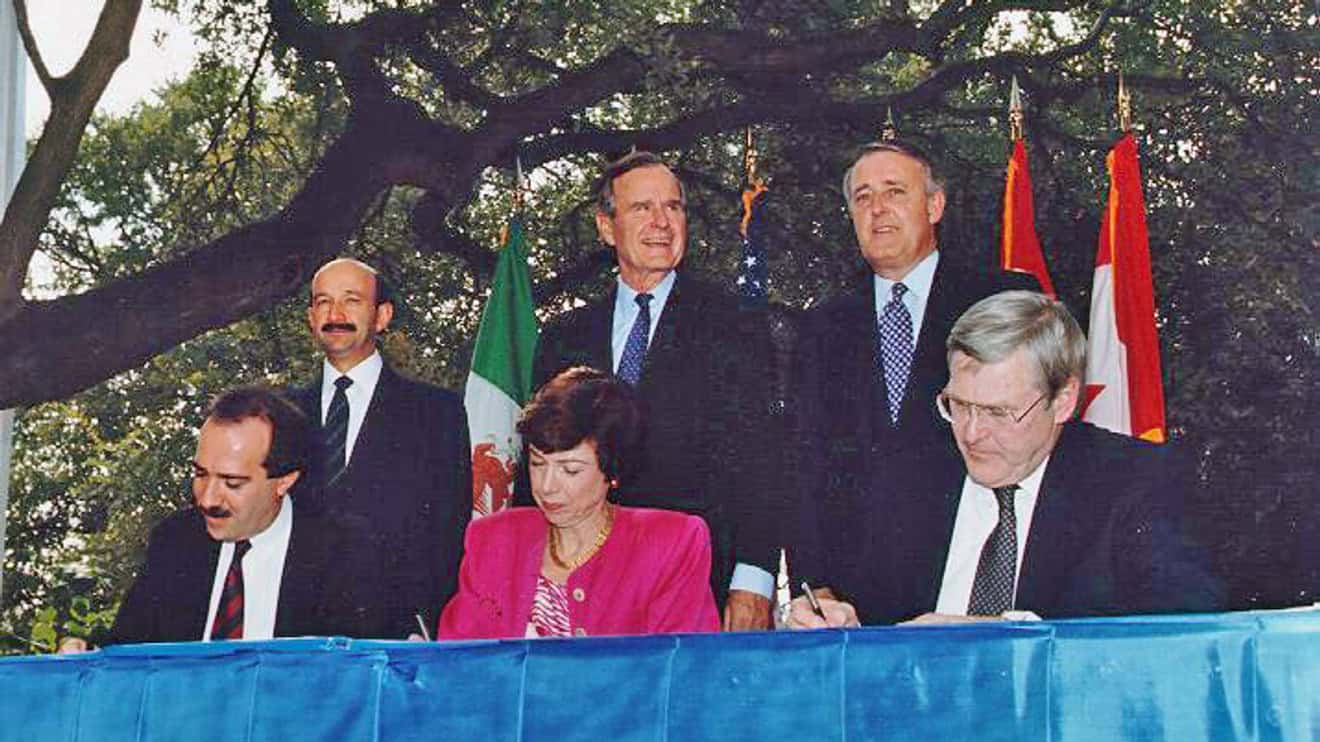
1994 The North American Free Trade Agreement (NAFTA) took effect among the U.S., Canada, and Mexico and phased out most tariffs among them over 15 years. Trade among the three grew from about $290 billion in 1993 to more than $1.1 trillion by 2016.
TODAY Goods that meet the rules of NAFTA’s replacement, the U.S.-Mexico-Canada Agreement, have been exempt from most of the new U.S. tariffs. Mexico has been the largest U.S. trading partner since 2023.
2001 China joined the WTO after 15 years of negotiations, and its exports grew rapidly. The World Bank estimates that close to 800 million Chinese people have left extreme poverty since 1978. Economists estimate that rising Chinese imports cost the U.S. at least 2 million jobs from 1999 to 2011.
2009 During the global financial crisis, world trade volume fell 12.2% as demand collapsed and trade credit froze.
TODAY The reverse is happening now. Demand for AI chips and servers led the WTO to raise its forecast for 2026 trade growth from 1.9% to 3.9%, despite tariffs and war.
2018–2020 The U.S. imposed tariffs of 25% on steel and 10% on aluminum, then tariffs on Chinese goods over China’s treatment of American technology and intellectual property. China retaliated. In January 2020, the two countries agreed to a partial truce known as the Phase One deal. China promised to buy $200 billion more in U.S. goods and services over two years, and the U.S. cut some tariffs. With the COVID-19 pandemic disrupting trade, China bought about 58% of what it promised. Planned talks on China’s government support for its own companies never took place.
2019 The WTO’s appeals court stopped working after the U.S. blocked new judges, leaving no body to issue final rulings in trade disputes. In 2020, the European Union, China and other members created a substitute, which the U.S. did not join.
TODAY Countries targeted by U.S. tariffs in 2026 have no binding way to appeal, so they negotiate or retaliate.
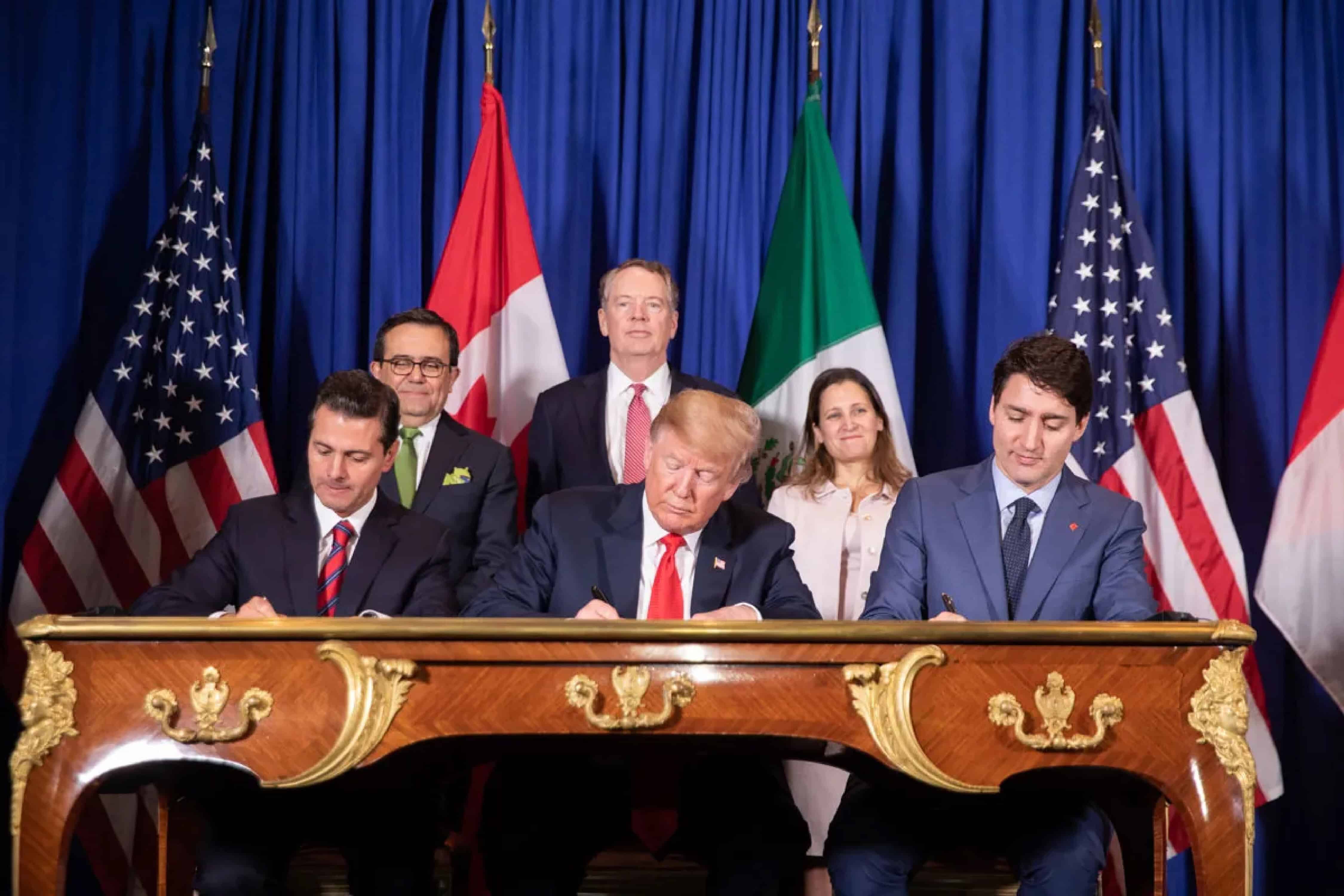
July 2020 After President Trump threatened to withdraw from NAFTA, which he blamed for moving U.S. factory jobs to Mexico, the three countries replaced it with the U.S.-Mexico-Canada Agreement. The new deal required more car parts to be made in North America, pushed Mexico to allow independent unions, and called for a joint review in 2026.
TODAY The U.S. declined to confirm the deal’s continuation in 2026, so the three countries now face annual reviews until they extend it or it ends in 2036.
October 2022 The U.S. restricted sales of advanced chips and chipmaking equipment to China, citing their military uses.
TODAY In October, China proposed its own limits on exports of AI technology, including the software behind chatbots.
April–October 2025 President Trump announced tariffs of at least 10% on imports from most countries under a 1977 law that gives the president emergency economic powers. U.S. tariffs on Chinese goods reached 145% before the two sides agreed in May to lower them. President Trump and President Xi later met in Busan, South Korea, and agreed to a truce. China paused new limits on exports of rare earths, minerals used in electronics, cars, and weapons, and the U.S. lowered some tariffs.
TODAY China’s pause on rare-earth limits just expired on November 10.
January–May 2026 The EU began charging importers of steel, cement, and other goods for the carbon emissions released in making them, a charge India and China have criticized as a trade barrier. On May 1, a trade agreement between the EU and the South American bloc Mercosur took effect with Argentina, Brazil, and Uruguay.
February 2026 The U.S. and Israel attacked Iran, and Iran closed the Strait of Hormuz, the narrow passage between Iran and Oman that carried about a fifth of the world’s oil. Oil passing through the strait fell from about 21.6 million barrels a day in late 2025 to 4.9 million in the second quarter of 2026. Oil prices rose from just under $70 a barrel before the war to about $105 in mid-October. Attacks on ships continue despite ceasefire talks.
September–October 2026 President Xi made his first state visit to Washington in 11 years. The two countries agreed to cut tariffs on $30 billion of goods, start talks on artificial intelligence, and extend their truce, which U.S. officials say runs through Jan. 10, 2027. China has not confirmed that date.
Continue the conversation
Along with goods, trade has carried languages, mathematics, religion, art, and scientific discoveries across borders. What do cultures gain when ideas and customs travel, and what do they lose?
About 28 million people worked in forced labor worldwide in 2021, according to the International Labour Organization. What can consumers, companies, and governments do about forced labor they can’t see in a supply chain?