Past Event On April 18, 2026
John Green
Perpetually Curious
Tug at the threads of our beautifully baffling world with a bestselling author who finds meaning—and magic—in life’s strangest corners.
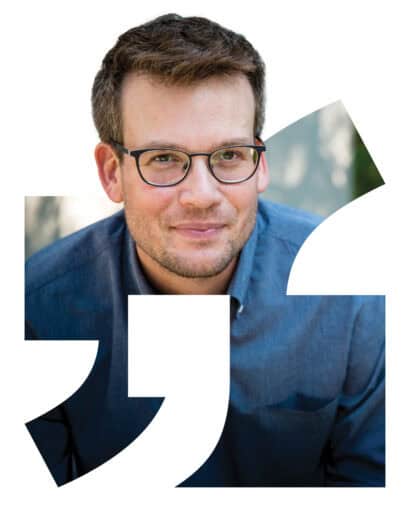
“I am strongly in favor of humanity. I don’t know that we are good news, but I believe that we can be good news for each other and for the world. Imagine a world without us. Yes, there would be more birdsong, But there would be no one to listen to Billie Holiday records. There would be trees falling in the forest and no one to wonder whether or not they made a sound.”
John Green
Perpetually Curious
April 18, 2026
Tuberculosis, the apocalypse, and the world’s largest ball of paint… John Green certainly has a lot on his mind.
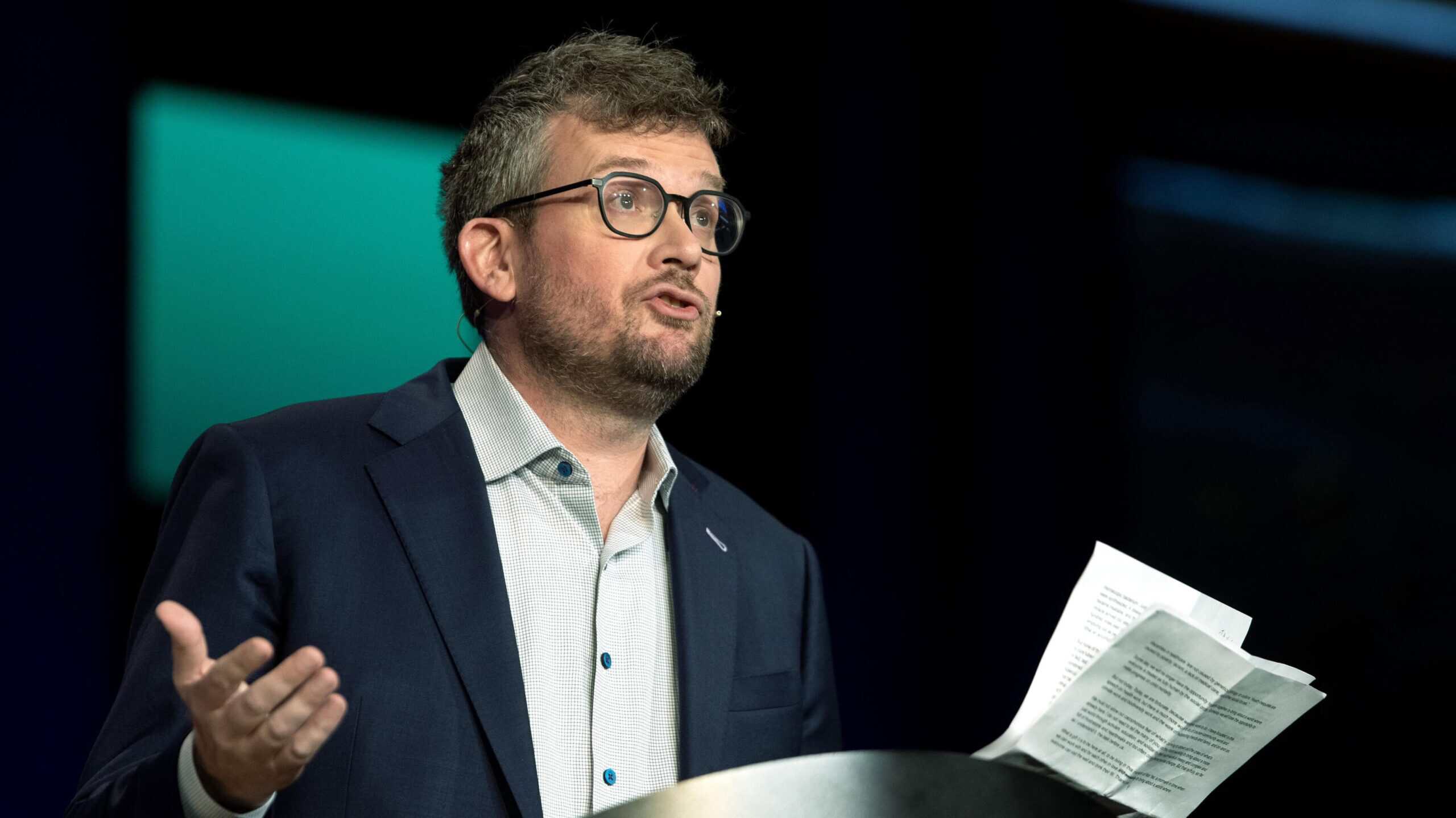
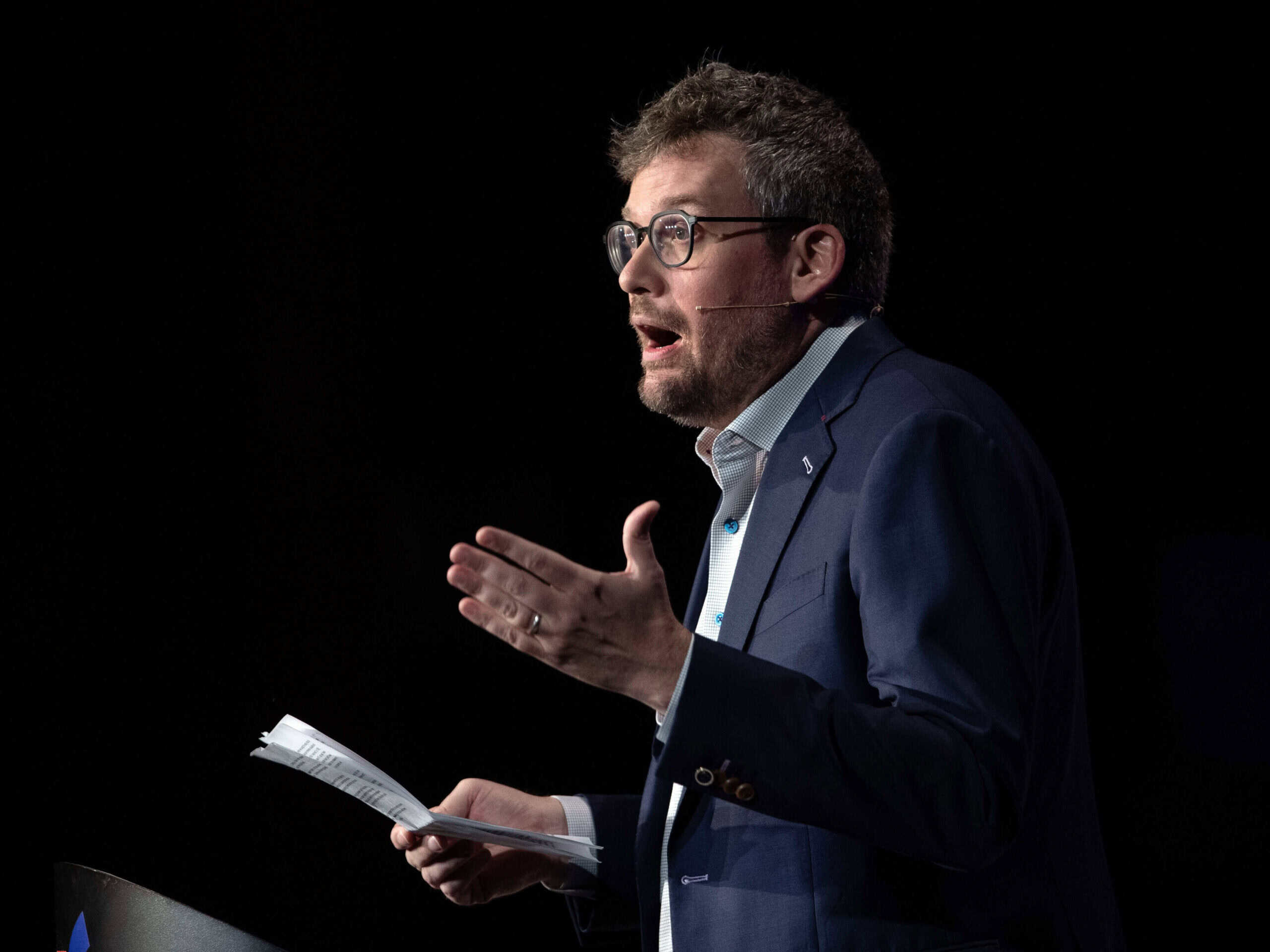
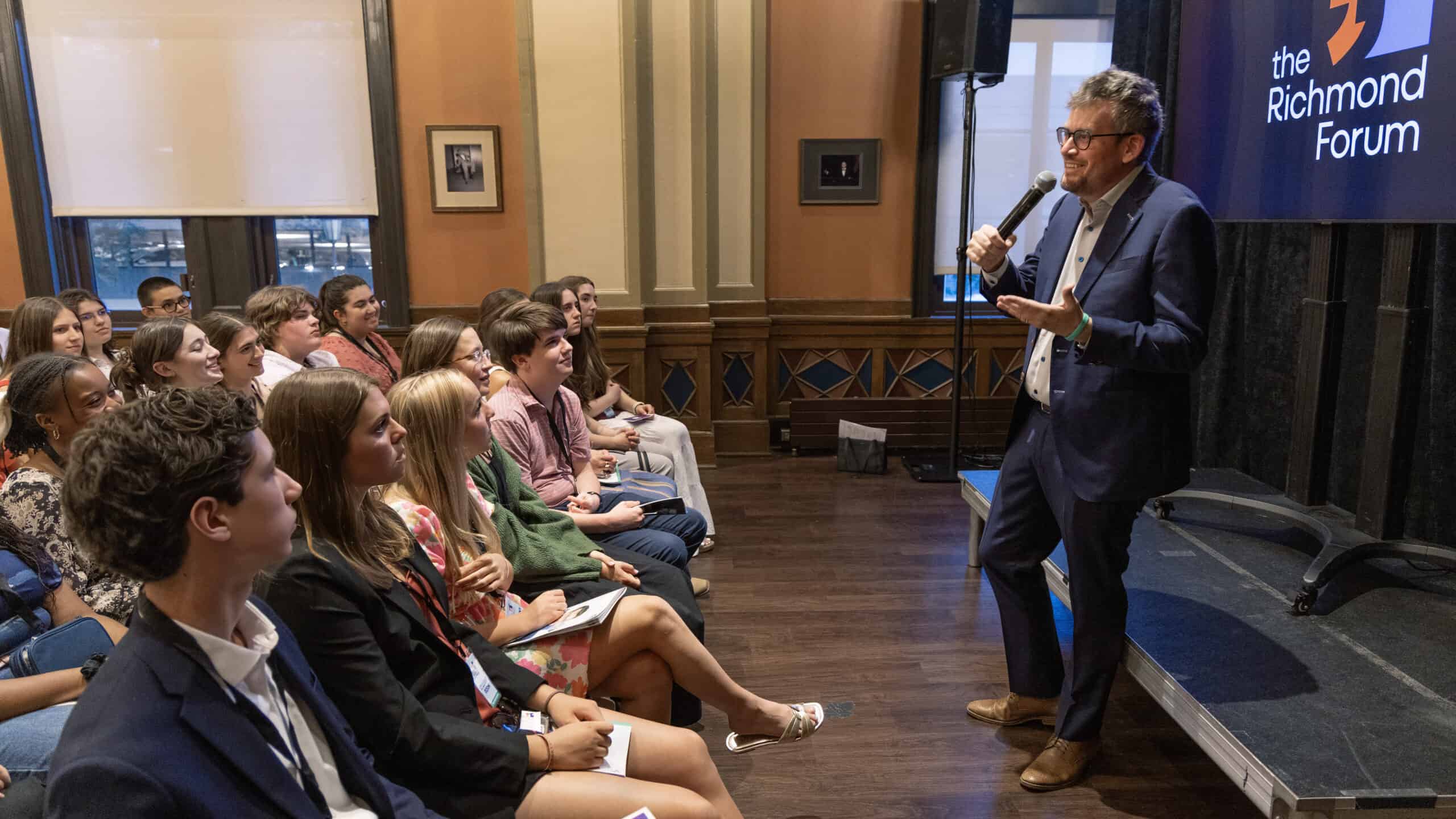
The No. 1 bestselling author of “The Fault in Our Stars,” “The Anthropocene Reviewed,” and “Everything Is Tuberculosis” brought us inside his curious mind for The Richmond Forum’s final program of its 40th season. With humor, humility, and hope, Green gave the audience a reason to pay closer attention to the world, something The Forum has promised since 1987.
He opened with the simple, disorienting fact of the room itself. “Every aspect of human life is exceptionally strange, from the way we organize our social structures to the way we create outcasts,” Green told the crowd. “I mean, what is even happening right now? 4,500 people are gathered in a large room. That is thoroughly unnatural.” Humans have existed for roughly 300,000 years, he noted, and cities large enough to fill a theater like this have only been possible for the last two percent of them.
The strangeness only compounds from there. We can measure the distance between stars, date the age of the universe, and know the exact chemical composition of suns millions of light-years away. We know when Cleopatra died. “How extremely weird is it that we know all of this,” Green said, “but we don’t know why the universe contains stuff.” The weirdness, he suggested, is so total that we often have to look away from it just to function, “the way we cannot stare at the sun for too long without being blinded by its light.” But Green has built a career on staring anyway. And the weirdest thing of all, he told the audience, was still to come.
“I am utterly befuddled by the business of being a human being in the second quarter of the 21st century.”
– John Green
For hundreds of thousands of years, humans lived alongside TB without understanding it. In 1882, bacteriologist Robert Koch identified its cause. Seventy years after that, the first effective drugs were synthesized. It was, Green said, a miracle of collective human effort and proof of what is possible when people work together toward a common problem.


“But last year, more people died of tuberculosis than died of homicide, malaria, and typhoid combined, about 1.25 million people,” he said. “It remains common not because we must live with TB, but because, on some level, we choose to live with it. What a fascinating and horrific choice.”
“Tuberculosis embodies both the great hope of humanity — when we work together, we can understand and combat tremendously complex problems — and also the great failure of humanity — that we have known the solution to TB for decades, but failed to implement those solutions for people who need them the most, because those people happen to live mostly in profoundly impoverished communities.”
“I am utterly befuddled by the business of being a human being in the second quarter of the 21st century,” Green said, and the audience laughed. Green described a species powerful enough to reshape the planet’s climate, yet unable to choose how it does so. Capable of killing millions through war or neglect, yet powerless to save those closest to us from suffering.
However, Green resisted despair with data. In 1995, 12 million children under the age of 5 died globally. Last year, that number fell below 5 million. “That’s the fastest progress on child mortality in human history,” he said, “and it was not natural or inevitable or ordinary. It happened because hundreds of millions of people, from midwives to doctors to nutritionists to lawyers, made it happen.”
Progress, Green argued, is a decision. “I know that progress is possible,” he said, “and I strongly believe that humanity is worth it. We must not let our cacophonous fear of what is coming drown out the cries of what is already here. Today, we are lucky because we have work to do.”
Which brings us, somehow, to an Indiana roadside attraction.
The world’s largest ball of paint started as a baseball. A father and son painted it, and then, out of curiosity, painted it again, and again. Decades later, it has accumulated some 30,000 layers, and visitors can continue to add their own coats, each one responding to the color left by the person before them. Green called it his favorite work of art on Earth. In it, he sees humanity building something together, one improbable layer at a time, each gesture an answer to the one that came before.
“Art is something that we are all making together,” Green said. “It is a body of work. That gives me hope. It gives me hope to know that each of us is going to add a layer to the ball of paint in our lives, that each of us is going to march the species forward through our love for others, through our love for our family and our friends, through our love for our community.”
It was a fitting close for a night and a season, built on the premise that curiosity is a practice. A choice to keep looking, keep asking, and keep painting.
Continuing the Conversation
Green is someone who can’t help pulling on the loose threads of the world. What are you perpetually curious about? What subjects have you found yourself falling down rabbit holes on, reading books about, or just thinking about more than seems reasonable?
Green spent much of his career writing for teenagers about some of life’s hardest experiences, like grief, illness, and identity. What did you read as a teenager that impacted the way you see the world?
Green built a devoted intellectual audience on a platform designed primarily for entertainment. Do you think that was a subversion of what YouTube was for, or did he reveal something about what audiences were hungry for that the platform itself hadn’t fully understood?


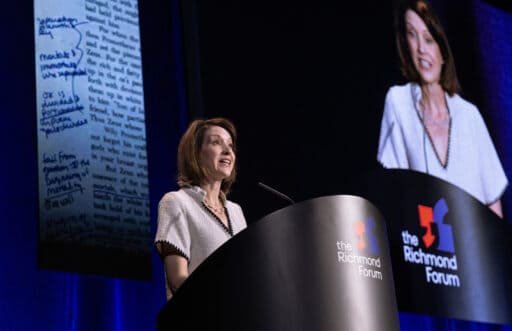
“John Green was everything that the Forum represents. He was interesting, caused me to think, started a discussion and debate with friends and family after the Forum and gave me a call to action. This speaker was a perfect ending to the 40th season of the Forum.”
– Subscriber Survey Comment
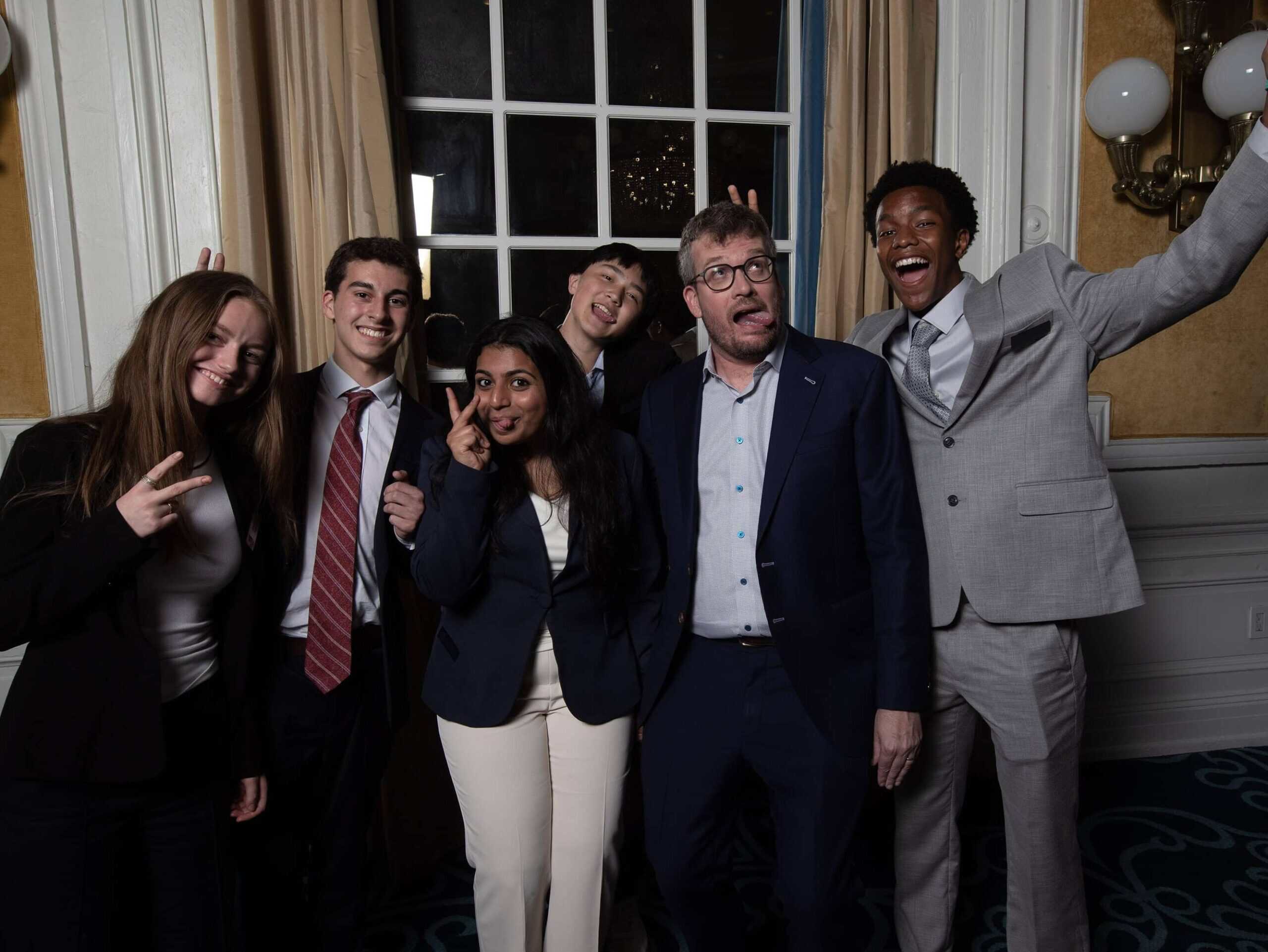
About John Green
John Green is the No. 1 New York Times bestselling author of “Looking for Alaska”, “An Abundance of Katherines”, “Paper Towns”, “The Fault in Our Stars”, “Turtles All the Way Down”, and “Everything is Tuberculosis”. He is also the coauthor, with David Levithan, of “Will Grayson, Will Grayson”. He was the 2006 recipient of the Michael L. Printz Award, a 2009 Edgar Award winner, and has twice been a finalist for the Los Angeles Times Book Prize. Green’s books have been published in more than 55 languages and over 24 million copies are in print.
Green’s latest book, “Everything is Tuberculosis”, was an instant No. 1 New York Times, Washington Post, and Indie bestseller. Regarded as a timely and “highly readable call to action” in a starred Kirkus review, the book is a deeply human social and scientific history in which Green illuminates the healthcare inequities that allow this curable, treatable infectious disease also to be the deadliest, killing 1.5 million people every year.
Film and television adaptations of his novels have reached wide audiences. The 2014 film version of “The Fault in Our Stars”, starring Shailene Woodley and Ansel Elgort, was a critical and box office success. “Paper Towns” followed in 2015, and a Hulu adaptation of “Looking for Alaska” premiered in 2019. Green’s short story was also featured in the 2019 Netflix holiday film “Let It Snow”.
In 2007, John and his brother Hank ceased textual communication and began to talk primarily through videoblogs posted to YouTube. The videos spawned a community of people called “nerdfighters” who fight for intellectualism and to decrease the “overall worldwide level of suck.” Although the Greens have long since resumed textual communication, they continue to upload two videos a week to their YouTube channel, vlogbrothers, where their videos have been viewed more than 800 million times.
In 2011, the Green brothers co-founded the educational platform Crash Course, which offers video series on subjects ranging from history and literature to physics and economics. Crash Course has amassed more than 10 million subscribers and over 1 billion views.
He lives with his family in Indianapolis and is a graduate of Kenyon College.
Additional Resources
-
John Green still has hope
“Wild Card” podcast, NPR
-
The Internet: A Review
Slate
-
Why John Green Likes Writing for Teenagers
The New York Times
Why do we draw hearts like that?

Join us Next season
Memberships are on sale now for the 2026 – 2027 season. Options start at $145.