Past Event On November 22, 2025
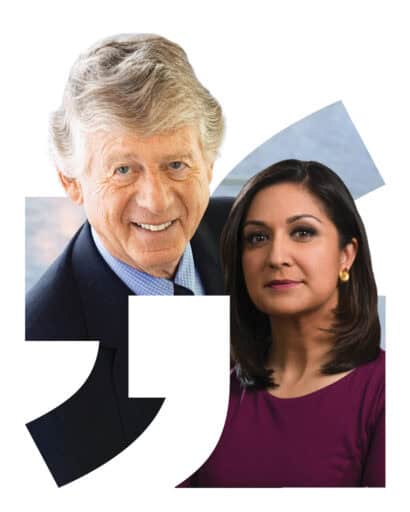
Ted Koppel with Amna Nawaz
40 Years: Moments That Mattered
We revisited the stories behind history’s biggest headlines with a legendary journalist who also happens to have been The Forum’s first-ever speaker.
“Why is journalism important at all? Because you all have other lives. You cannot possibly be up to speed on all the important things that are going on in our country and around the world. If we believe the great American myth that it is the people who rule, the people who control, then it has to be an informed public.”
Ted Koppel
40 Years: Moments That Mattered
November 22, 2025
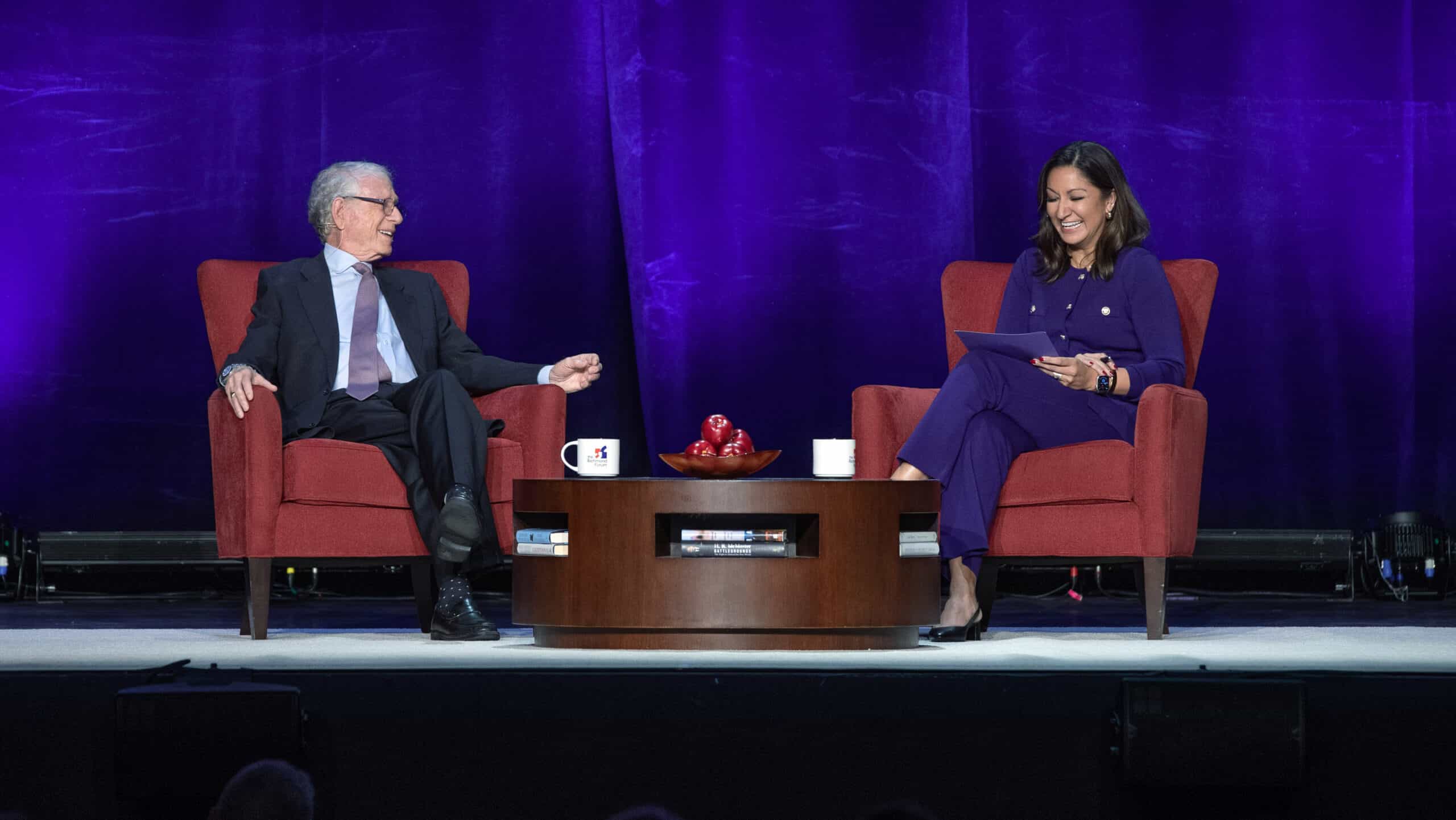
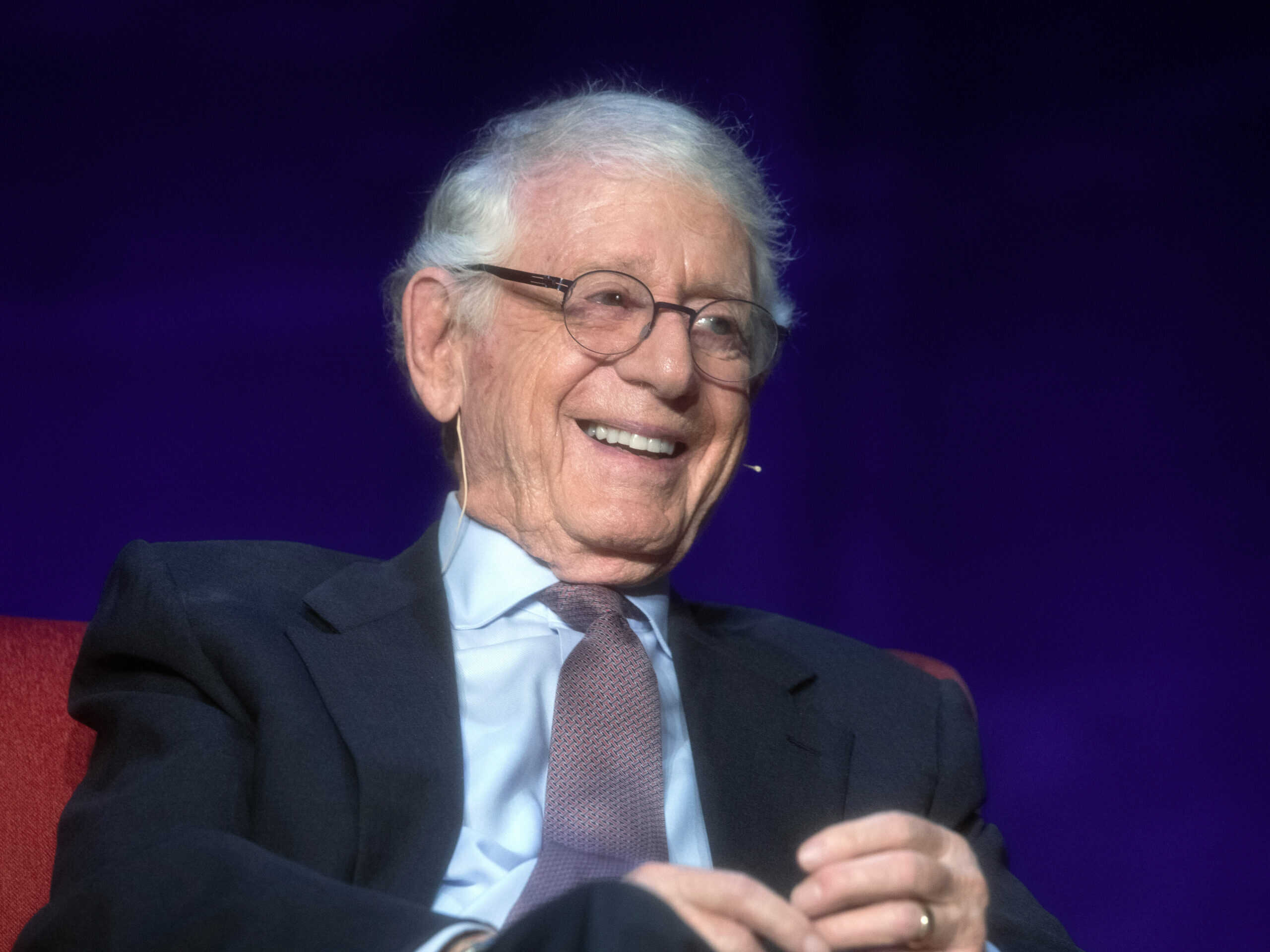
The Richmond Forum opened its 40th season with a standing ovation for the return of Ted Koppel, who inaugurated The Forum’s first season in 1987. Stepping into the lights, he waved off the applause with trademark dry humor and immediately set the tone for an evening that was equal parts history lesson, master class, and homecoming.
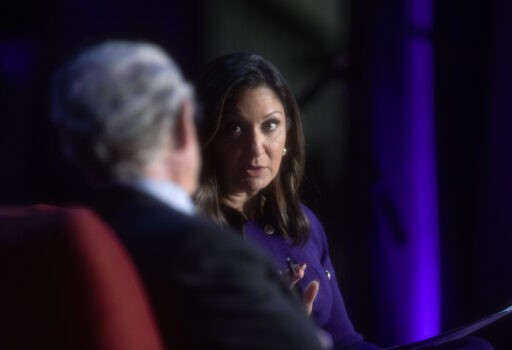
It was a full-circle moment not just for The Forum, but for the duo seated at center stage. Moderating the conversation was “PBS NewsHour” co-anchor Amna Nawaz, who began her journalism career as a “Nightline” intern working for Koppel. A month into the job, the September 11 attacks changed the world. “I got to watch the very best journalists in the business do what they do best,” Nawaz said. “I am a journalist today because of that day.”
Before diving in, Koppel asked the audience if they knew the significance of the date. “Sixty-three years ago today, President John F. Kennedy was shot and killed in Dallas,” he reminded the room. People then believed no one would ever forget that day, he said, but new generations come along, and the narrative shifts. “That’s what we’re talking about tonight.” It was the perfect entry point into a conversation about what endures, what is lost, and how journalism helps us remember.
The world of journalism is vastly different in 2025 than it was when Koppel filed his earliest reports. Covering the Vietnam War, it took a minimum of two or three days just to get footage from the field to American screens. The process required motorcycle couriers, international handoffs, and the patient work of editors who knew their stories needed to survive the wait. Today, anyone with a smartphone can broadcast to the world in seconds. The contrast was its own lesson: technology evolves, but our pursuit of truth is constant.
“My problem with so much of what’s on television news these days is that it’s simple, it’s shallow, and too often it’s partisan. You need us to tell you what’s going on, even if you don’t like what you hear.”
– Ted Koppel
The pair traced the major media moments that have shaped journalism since Koppel’s first Forum appearance, beginning with the 1987 repeal of the Fairness Doctrine, the shift that opened the door to partisan talk radio, then partisan cable news. “My problem with so much of what’s on television news these days is that it’s simple, it’s shallow, and too often it’s partisan,” Koppel said. “You need us to tell you what’s going on, even if you don’t like what you hear.” In an era defined by volume, he argued, the quieter virtues, like accuracy, balance, restraint, matter more than ever.
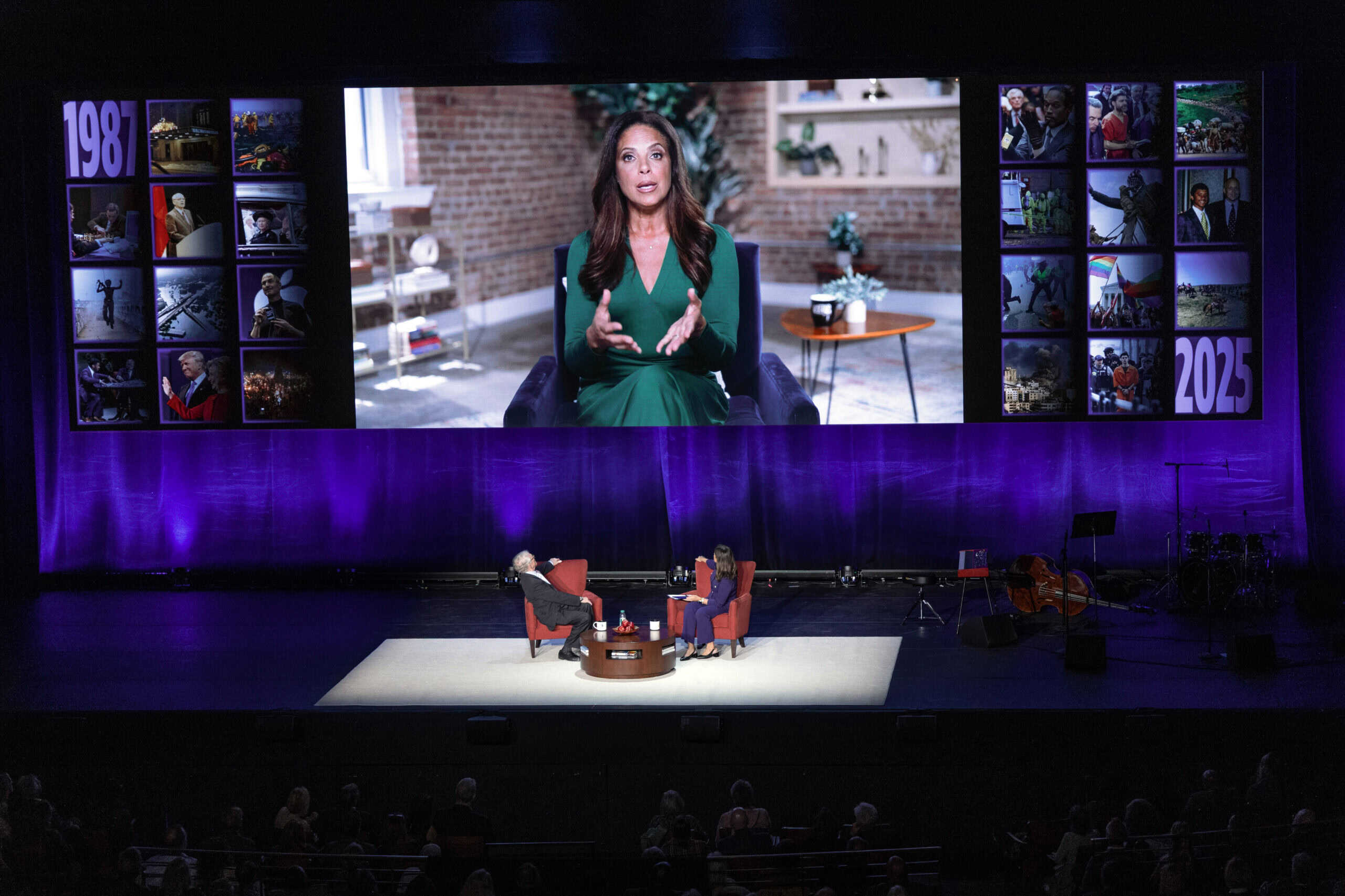
Some of the night’s most powerful moments centered on stories that shifted public understanding. Koppel recalled his 1990 live town hall with Nelson Mandela, one of the broadcasts he remains most proud of. He then reflected on his groundbreaking 1992 interview with Navy Lt. Tracy Thorne, who appeared on “Nightline” as an openly gay service member during the debates that led to the “don’t ask, don’t tell” policy.
“That interview took a lot of courage on the part of the young naval officer,” he said. When Nawaz announced that Judge Tracy Thorne-Begland was in the audience, the room erupted in applause, a testament to journalism’s ability to move public opinion and humanize national issues.
Koppel and Nawaz explored the rise of digital news and the early cracks in legacy media’s authority. When the Clinton–Lewinsky scandal broke on the Drudge Report, it was clear the landscape had shifted. Speed suddenly outran standards. Koppel recalled receiving early word about the infamous blue dress while he was in Havana covering the Pope’s visit. He chose to stay on assignment, which he admitted was “the wrong decision, from a news point of view.” he admitted. “We were talking about something that we thought was going to cost Bill Clinton the presidency.”
Today, social media is the leading source of news for Americans. People in power, like President Donald Trump, can now speak directly to the public without the mediation of journalists. “It’s undermining the essence of the United States,” Koppel warned. “We need to support those news organizations that are still making an effort to produce really valuable news…and then find a way of getting [people] to watch it.”
He returned throughout the night to a central truth: “Why is journalism important at all? Because you all have other lives. You cannot possibly be up to speed on all the important things that are going on in our country and around the world. If we believe the great American myth that it is the people who rule, the people who control, then it has to be an informed public.”
Koppel ended the evening on an unexpected note of delight, singing a song he wrote in the 1970s while traveling with President Nixon to the Great Wall of China. “I’ve got several more songs,” he teased, “but you’ll have to wait until your 80th season to hear them!”
“40 Years: Moments That Mattered” wasn’t just the opening of a milestone season. It was a reminder of what The Richmond Forum exists to do: bring together voices that help us understand the world, challenge us to think harder, and inspire us to stay curious as we navigate an ever-changing future.
Continuing the Conversation
Last night’s program revisits major media moments since Koppel’s first appearance at The Forum in 1987. What moments or news stories have most shaped how you see the world?
In moments of crisis, what do you believe journalists should prioritize: speed, accuracy, context, or calm?
What do you believe journalism owes the public right now, and do you feel that responsibility is being met?
How have your own news-consumption habits changed over the last five or ten years, and what has driven those shifts?
As local newsrooms shrink and/or disappear, how has your relationship to news about your own community changed, and what do you feel is lost or gained?
Considering AI-generated content, citizen reporting, and a fractured media landscape, what do you think the next decade of journalism will look like?
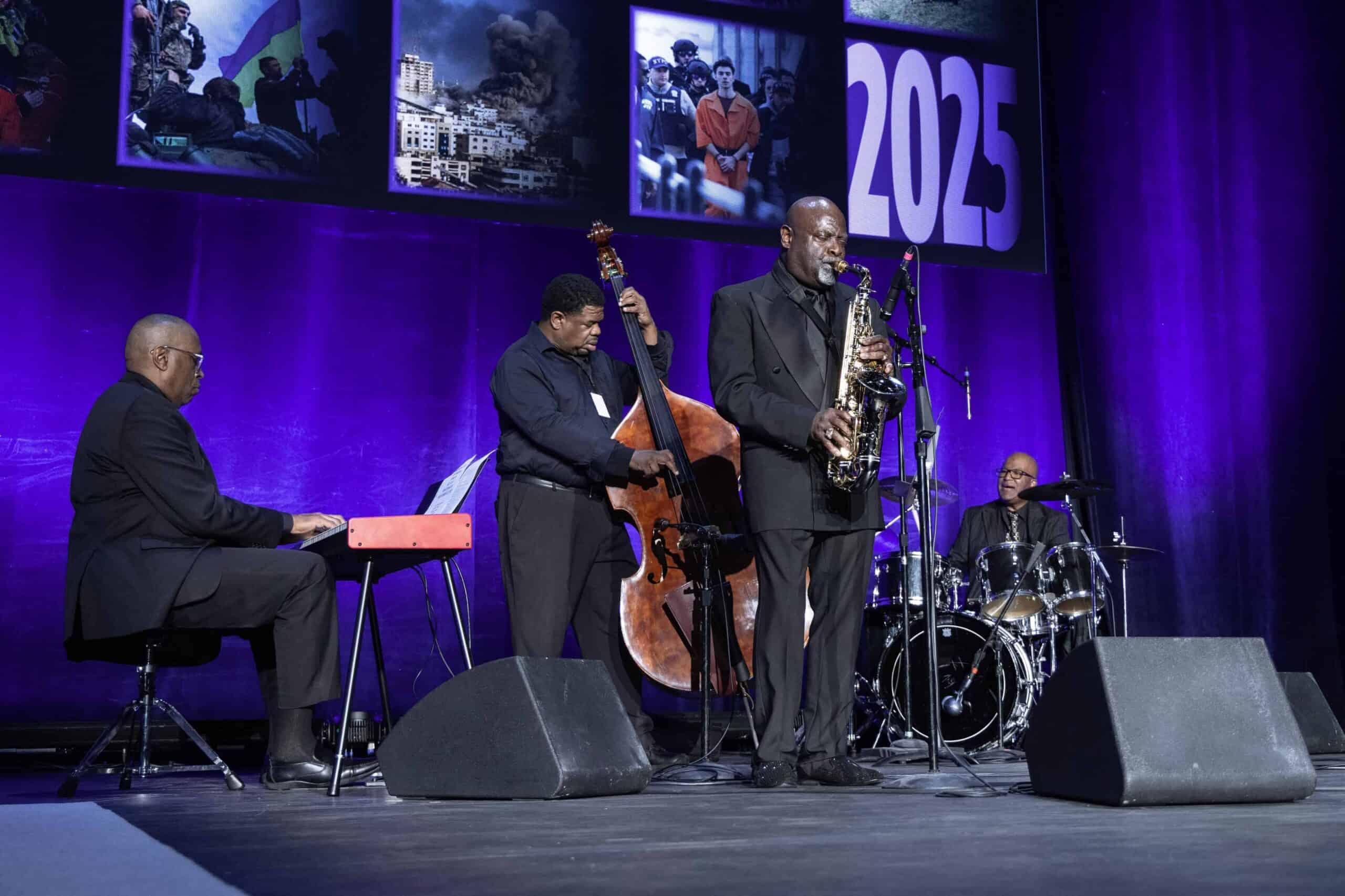
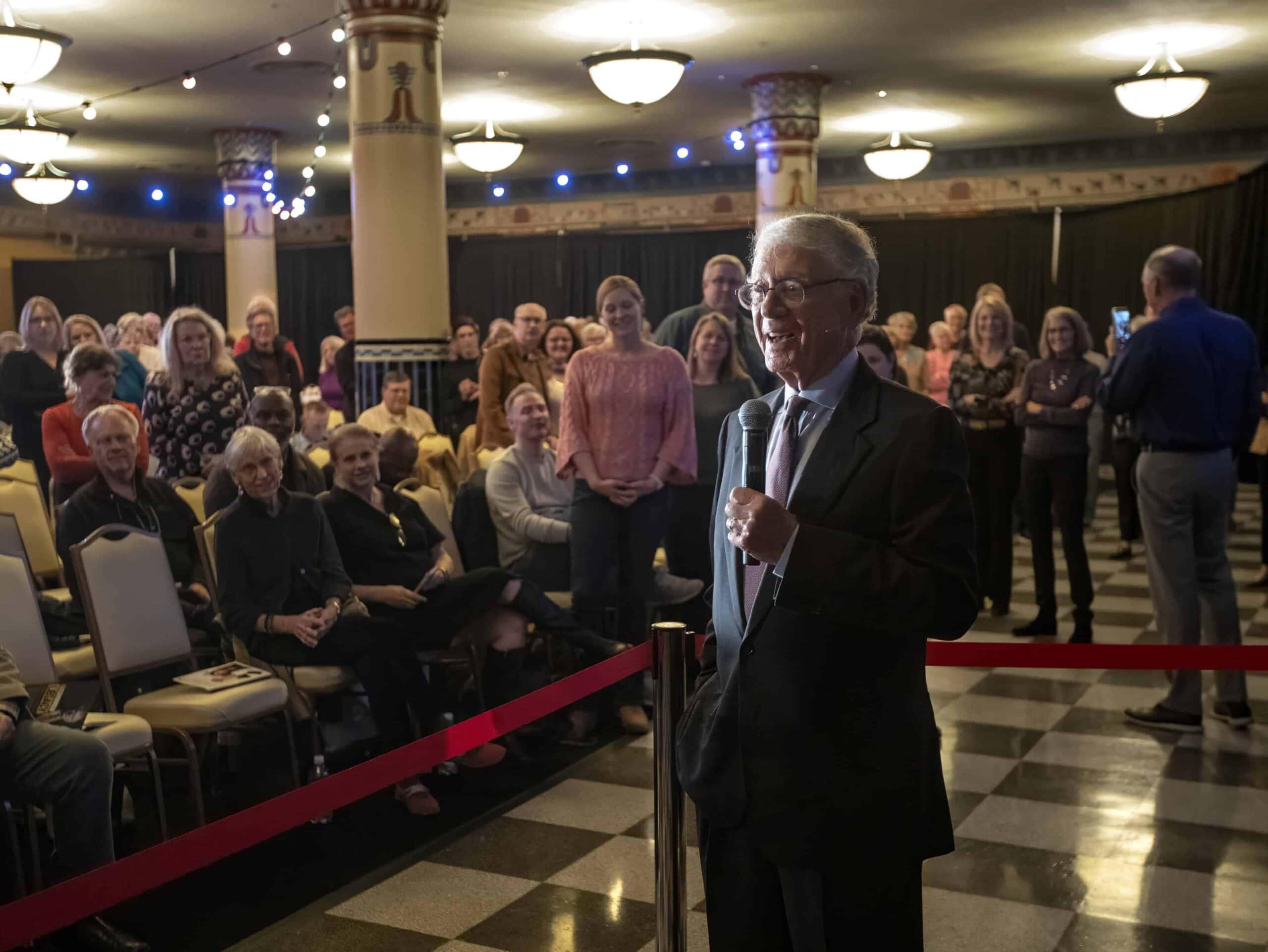
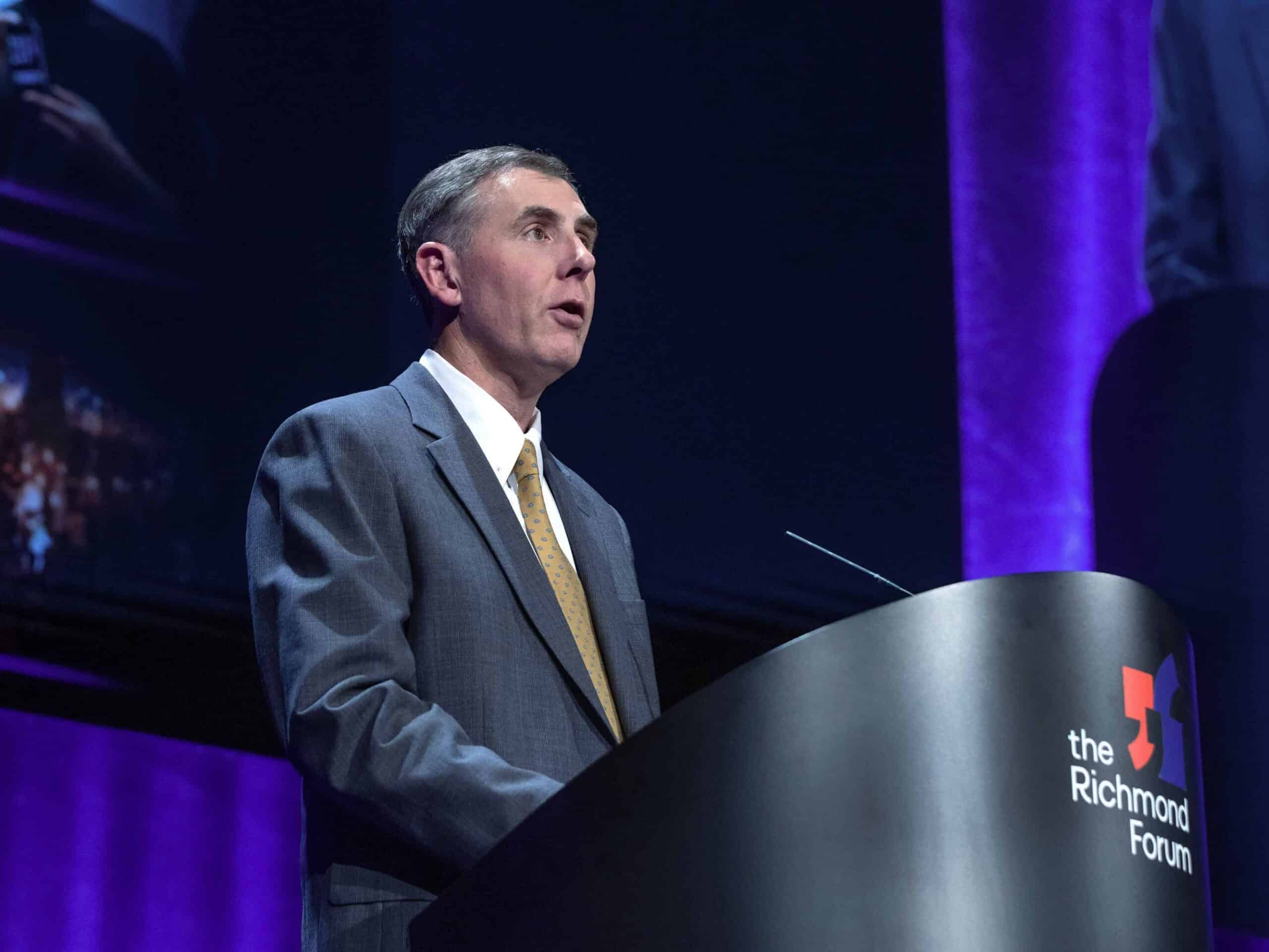
“This was an incredibly special program. I feel it was a true privilege to hear him talk on his life experience and deep insight. I also had the opportunity to connect more with my mother, who remembers watching his Vietnam coverage at the start of his career.”
– Subscriber Survey Comment
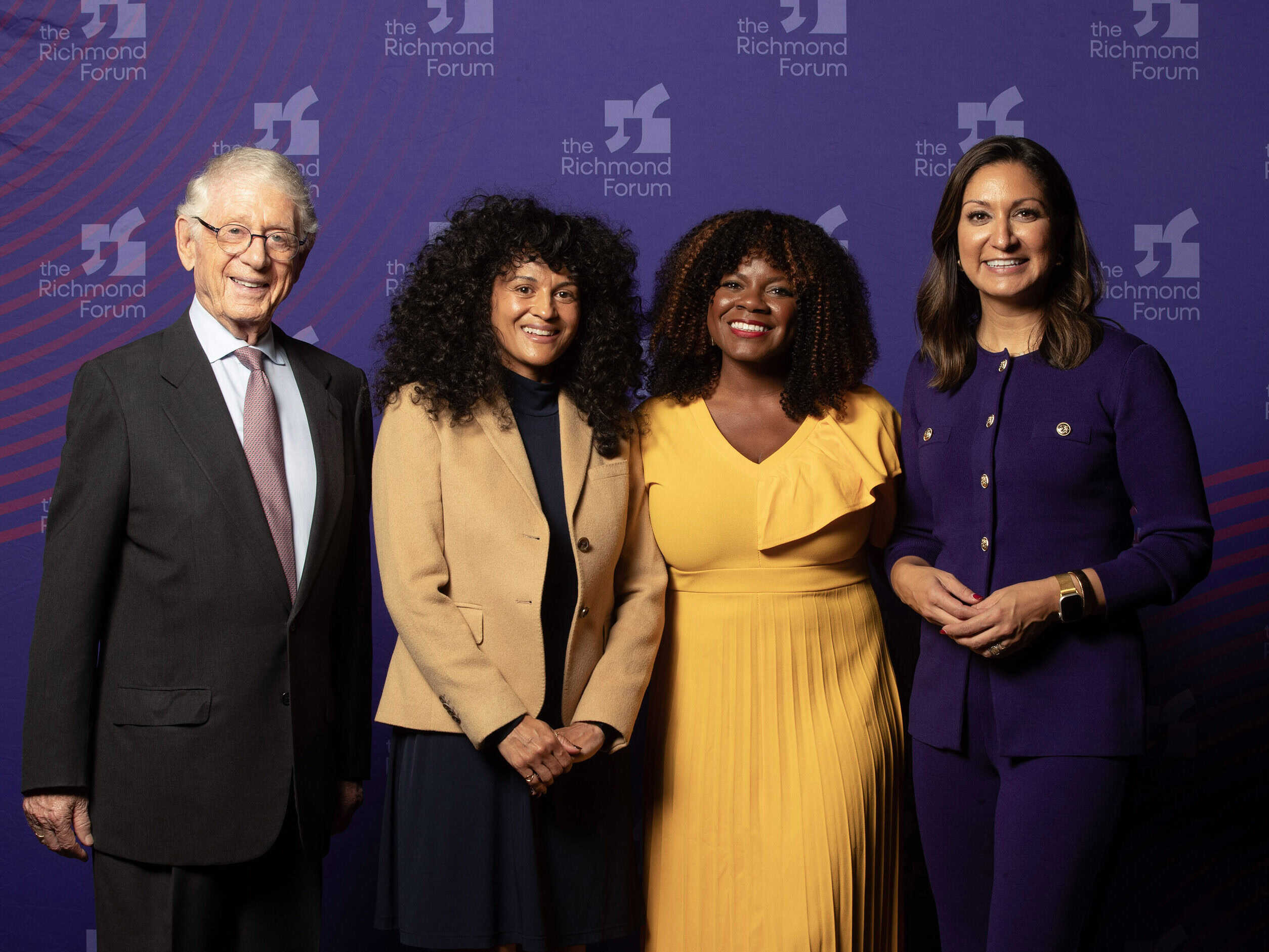
About Ted Koppel
For over five decades, Ted Koppel has been a defining voice in broadcast journalism, bearing witness to many of the most pivotal events in modern history.
Best known as the anchor and managing editor of ABC’s “Nightline”, Koppel led the program from its launch in 1980 until 2005. Over more than 6,000 broadcasts, he covered landmark stories across the globe. On the final day of the Soviet Union, Koppel was the only journalist reporting from inside the Kremlin with Mikhail Gorbachev. He also conducted the first U.S. television interview with Nelson Mandela at his home in Soweto, South Africa, following his release after 27 years in prison.
Before “Nightline”, Koppel was a correspondent and bureau chief for ABC News. When he was hired in 1963, he was the youngest network correspondent working in the country. He notably reported on the civil rights movement in Selma, Alabama, and covered presidential campaigns from 1964 onward. He also reported on the conflicts in Vietnam, Laos, and Cambodia, President Nixon’s historic 1972 trip to China, and Henry Kissinger’s Middle East shuttle diplomacy.
By the time he stepped down from “Nightline”, Koppel was the most decorated journalist in ABC News history. His honors include 43 Emmy Awards (including a Lifetime Achievement Emmy), eight Peabody Awards, 12 duPont-Columbia Awards, and nine Overseas Press Club Awards — more than any contemporary. He was selected as a Chevalier de l’Ordre des Arts et des Lettres from the Republic of France and has received 22 honorary doctorates. In 2012, he was named one of the “100 Outstanding Journalists in the United States in the Last 100 Years” by NYU’s Arthur L. Carter Journalism Institute.
In 2015, he authored “Lights Out”, a New York Times bestseller that explored the threat of a major cyberattack on America’s power grid. Koppel continues to contribute insightful reporting as a senior contributor — and the nation’s oldest working network correspondent — at “CBS News Sunday Morning.”
About Amna Nawaz
Amna Nawaz is co-anchor of “PBS NewsHour” and an Emmy- and Peabody-winning journalist.
Before joining “NewsHour” in 2018, Nawaz was an anchor and correspondent at ABC News, where she led livestream coverage of the 2016 presidential election. She previously served as a foreign correspondent and Islamabad bureau chief at NBC News, where she was the first foreign journalist to report from North Waziristan—then a Taliban stronghold—while pregnant with her first child. She also founded NBC’s Asian America platform in 2014 to elevate stories from the country’s fastest-growing demographic.
At PBS, Nawaz has reported from the White House, across the U.S., and around the world on issues including immigration, foreign policy, gun violence, education, climate, and culture. She has covered the January 6 attack on the U.S. Capitol, the Uvalde school shooting, U.S. presidential elections and inaugurations, the war in Afghanistan, and Hurricane Katrina.
Nawaz has interviewed numerous global leaders and newsmakers, including Secretary of State Antony Blinken, Afghan President Ashraf Ghani, Ava DuVernay, and Sue Bird. She co-hosts “Beyond the Canvas”, PBS’s primetime arts series, and has produced award-winning documentaries including “Raising the Future” and “Life After Lockup”.
She is a four-time Peabody Award recipient for “PBS NewsHour” coverage, including from Israel (2024), Uvalde (2023), and Capitol Hill (2021), and on global plastic pollution (2019). She has also hosted podcasts such as “Broken Justice” and “The Longest Year”.
The first Muslim American and first Asian American to moderate a U.S. presidential debate, Nawaz is a member of the Council on Foreign Relations and several journalism associations. She earned degrees from the University of Pennsylvania and the London School of Economics. A first-generation American born to Pakistani parents, she grew up in Alexandria, Virginia, and continues to live in the Washington, D.C., area with her husband and two daughters.
Additional Resources
-
1968 all over again? Heather Hendershot and Ted Koppel on a year for the media to remember.
“The Kicker” podcast, Columbia Journalism Review
-
AIDS: A National Town Hall Meeting
“Nightline” (1987)
-
“PBS NewsHour’s” Amna Nawaz
WHYY